The world stands at a crossroads where traditional power structures are giving way to a more distributed landscape of influence, reshaping how nations interact economically and politically. 🌍

The Dawn of a Multipolar World Order
For decades following World War II, the global economic system operated under a predominantly unipolar or bipolar framework. The United States emerged as the undisputed economic superpower, with institutions like the International Monetary Fund, World Bank, and later the World Trade Organization reflecting Western ideological and economic principles. However, the 21st century has witnessed a dramatic transformation in this arrangement.
Multipolarity represents more than just the presence of multiple powerful nations; it signifies a fundamental restructuring of how economic power is distributed, exercised, and legitimized across the international system. This shift encompasses the rise of emerging economies, the creation of alternative financial institutions, and the diversification of trade relationships that challenge the post-war consensus.
The acceleration of this transformation became particularly evident following the 2008 financial crisis, which exposed vulnerabilities in the Western-dominated financial system. Nations across Asia, Latin America, and Africa began questioning the sustainability and fairness of existing arrangements, seeking alternatives that better represented their interests and developmental aspirations.
Economic Power Centers Reshaping Global Commerce
China’s economic ascent stands as the most visible manifestation of multipolar emergence. From being the world’s workshop to becoming a technological innovator and major creditor nation, China has fundamentally altered global economic calculations. The Belt and Road Initiative alone involves over 140 countries, creating new trade routes and economic dependencies that bypass traditional Western channels.
India’s trajectory similarly reflects multipolar dynamics. With a rapidly growing economy, demographic advantages, and increasing technological capabilities, India positions itself as both a manufacturing alternative to China and a service economy powerhouse. The country’s participation in forums like BRICS while maintaining relationships with Western powers exemplifies the complex navigation required in a multipolar world.
Beyond these giants, regional powers are asserting economic influence in unprecedented ways. Brazil in Latin America, Turkey bridging Europe and Asia, Saudi Arabia leveraging energy resources for diversification, and the European Union maintaining its collective economic weight all contribute to this distributed power landscape.
The BRICS Expansion and Alternative Architecture 💼
The BRICS grouping—originally Brazil, Russia, India, China, and South Africa—recently expanded to include Argentina, Egypt, Ethiopia, Iran, Saudi Arabia, and the United Arab Emirates. This expansion represents more than numerical growth; it signals a concerted effort to create parallel economic structures that operate outside traditional Western frameworks.
The New Development Bank, established by BRICS nations, provides an alternative to World Bank lending, often with fewer conditionalities and greater sensitivity to borrower sovereignty. Similarly, discussions about creating alternatives to SWIFT payment systems and reducing dollar dependency in international trade reflect the desire for economic autonomy.
These developments don’t necessarily aim to dismantle existing systems but rather to provide options, creating competitive pressure that could reform international economic governance toward greater inclusivity and representation.
Currency Diversification and the Dollar’s Future
The US dollar has enjoyed reserve currency status since the Bretton Woods agreement, providing the United States with significant economic advantages including lower borrowing costs and the ability to project financial power through sanctions. However, multipolarity challenges this privileged position.
Central banks worldwide have been diversifying their reserves, increasing holdings of euros, yen, yuan, and gold. Bilateral trade agreements increasingly allow settlement in local currencies, reducing transaction costs and dollar exposure. China’s promotion of the yuan through swap agreements, pricing commodities in yuan, and establishing yuan clearing centers globally represents a strategic challenge to dollar dominance.
Russia’s pivot toward alternative payment systems following Western sanctions demonstrated both the weaponization potential of dollar dominance and the feasibility of operating outside dollar-based systems. This has accelerated conversations among numerous countries about reducing strategic vulnerability to any single currency.
Digital Currencies and Financial Innovation 🪙
The emergence of central bank digital currencies (CBDCs) adds another dimension to this transformation. China’s digital yuan pilot programs, the European Central Bank’s digital euro project, and similar initiatives worldwide could fundamentally alter cross-border payment mechanisms, potentially reducing the role of intermediary currencies in international transactions.
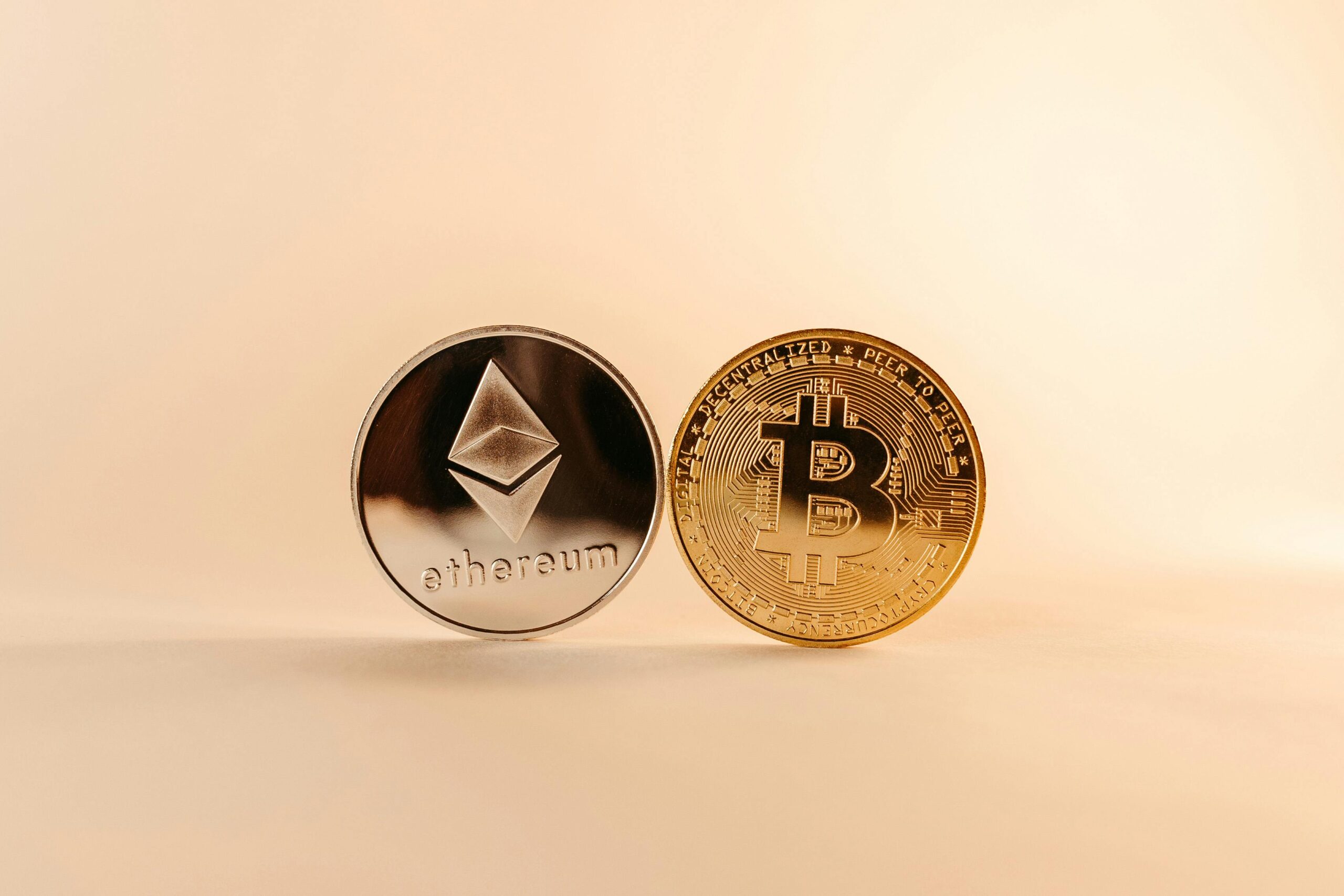
Cryptocurrencies, despite volatility and regulatory uncertainty, have introduced concepts of decentralized finance that resonate with multipolar aspirations. While unlikely to replace sovereign currencies, these technologies influence how traditional systems evolve and could provide tools for smaller economies to participate more effectively in global finance.
Trade Architecture and Regional Integration
Multipolarity manifests clearly in evolving trade arrangements. The proliferation of regional trade agreements reflects nations’ desires to secure economic relationships that serve specific interests rather than relying solely on global frameworks.
The Regional Comprehensive Economic Partnership (RCEP), encompassing ASEAN countries plus China, Japan, South Korea, Australia, and New Zealand, creates the world’s largest trading bloc by GDP. Notably, it excludes the United States, representing a significant shift in Asian economic integration that doesn’t center on American participation.
The African Continental Free Trade Area (AfCFTA) similarly demonstrates regional self-determination in economic governance. By creating a single market for goods and services across Africa, it positions the continent to negotiate with external powers from a position of greater strength while fostering intra-African trade that historically has been minimal.
Supply Chain Reconfiguration 📦
The COVID-19 pandemic exposed vulnerabilities in globally integrated supply chains, accelerating trends toward regionalization and diversification. The concept of “friend-shoring”—relocating production to politically aligned countries—reflects how multipolarity introduces geopolitical considerations into economic decisions previously guided primarily by efficiency.
This reconfiguration creates opportunities for emerging economies to integrate into global value chains. Vietnam, Bangladesh, Mexico, and Poland have benefited from companies diversifying away from excessive China concentration. However, it also introduces complexity and potentially higher costs as purely economic logic becomes subordinated to strategic considerations.
Technology, Innovation, and Economic Competition
Technological leadership increasingly determines economic power in the 21st century. The multipolar world features intense competition in artificial intelligence, quantum computing, biotechnology, renewable energy, and other frontier technologies that will shape future economic systems.
China’s investments in technology through initiatives like Made in China 2025 aim to achieve self-sufficiency in critical technologies, reducing dependency on Western suppliers. The country’s dominance in areas like 5G infrastructure, electric vehicle batteries, and solar panel manufacturing demonstrates significant progress toward this goal.
The United States maintains advantages in software, semiconductors, and breakthrough innovations, but faces challenges from both state-directed industrial policies elsewhere and domestic debates about industrial strategy. Europe pursues “strategic autonomy” in critical technologies, attempting to reduce dependencies on both American and Chinese suppliers.
Data Governance and Digital Sovereignty 💻
Control over data and digital infrastructure represents a crucial dimension of economic power. Different models have emerged: the American market-driven approach dominated by private platforms, the Chinese state-supervised system balancing innovation with control, and the European regulatory framework emphasizing privacy and user rights.
This fragmentation challenges the notion of a single global internet and digital economy. Data localization requirements, differing privacy standards, and restrictions on cross-border data flows create a more complex operating environment for businesses while reflecting divergent values and interests in a multipolar system.
Energy Transition and Economic Realignment
The global shift toward renewable energy fundamentally reshapes economic power dynamics. Traditional energy exporters face existential challenges, while countries controlling resources essential for clean energy technologies—lithium, cobalt, rare earth elements—gain strategic importance.
China’s dominance in processing critical minerals and manufacturing renewable energy equipment positions it advantageously in the energy transition. However, concerns about supply chain concentration are driving efforts to develop alternative sources and processing capabilities, creating opportunities for countries like Australia, Chile, and the Democratic Republic of Congo.
The energy transition also enables greater energy independence for importers, potentially reducing geopolitical leverage traditionally enjoyed by oil and gas exporters. This redistribution of energy-based power exemplifies how technological change intersects with multipolar dynamics to reshape the economic landscape.
Institutional Reform and Governance Challenges
Existing international economic institutions face legitimacy questions in a multipolar world. Voting structures in the IMF and World Bank still reflect the power distribution of 1945, not 2025. Emerging economies demand greater representation commensurate with their economic weight and contributions to global growth.
Reform efforts face resistance from countries benefiting from current arrangements, creating a tension between institutional adaptation and preservation of established power. This dynamic partially explains the creation of parallel institutions rather than solely reforming existing ones—sometimes establishing new structures proves easier than transforming entrenched systems.
The effectiveness of multilateral cooperation on issues like climate change, pandemic response, and financial stability depends on whether institutions can adapt to represent diverse interests equitably. Failure to reform risks further fragmentation and the weakening of global governance capacity precisely when transnational challenges require coordinated responses.
The Role of Middle Powers and Coalition Building 🤝
In a multipolar system, middle powers gain enhanced agency through strategic positioning and coalition building. Countries like Canada, Australia, South Korea, Indonesia, and Turkey can leverage relationships with multiple power centers, avoiding exclusive alignment while maximizing their influence on specific issues.
This dynamic creates a more fluid international system where alliances vary by issue area. A country might cooperate with China on trade, with the United States on security, and with Europe on climate policy. Such flexibility characterizes multipolar systems and distinguishes them from the rigid bloc mentality of bipolar arrangements.
Implications for Global Economic Stability
Multipolarity presents both opportunities and risks for global economic stability. On one hand, distributed power can provide resilience—problems in one region or system don’t necessarily cascade globally. Multiple growth engines can sustain global economic momentum when others falter.
Conversely, coordination challenges multiply when decision-making power is dispersed. Financial crises, climate change, pandemic response, and other collective action problems require cooperation that becomes more difficult as interests diverge. The risk of fragmentation into competing economic blocs could reduce efficiency and increase tensions.
The transition period itself carries particular risks. As power shifts but new equilibria haven’t established, uncertainty increases. Countries may miscalculate others’ intentions or capabilities, leading to conflicts that disrupt economic relationships. Managing this transition requires sophisticated diplomacy and institutional innovation.
Navigating the Multipolar Economic Future 🧭
For businesses, multipolarity requires strategic agility. Companies must navigate varying regulatory environments, geopolitical risks, and the possibility of economic decoupling in certain sectors. Diversification becomes essential—of markets, supply chains, and partnerships—to manage risks inherent in a more fragmented system.
For policymakers, the challenge involves balancing openness with strategic autonomy, cooperation with sovereignty, and global integration with national resilience. Successful navigation requires understanding that multipolarity doesn’t mean isolation but rather more complex interdependence requiring sophisticated management.
For individuals, the multipolar world creates both opportunities and uncertainties. Career prospects increasingly depend on understanding multiple economic systems and cultural contexts. The ability to operate across different regulatory, linguistic, and business environments becomes more valuable as economic activity distributes more evenly globally.
The Path Forward: Cooperation Within Competition
The evolution toward multipolarity appears irreversible barring dramatic unforeseen events. The question isn’t whether the global economic system will be multipolar, but what kind of multipolarity will emerge—cooperative or conflictual, rule-based or power-based, inclusive or fragmented.
History offers both encouraging and cautionary precedents. Multipolar systems can be peaceful and prosperous, as 19th century Europe demonstrated for periods. They can also be unstable and conflict-prone, as that same century’s end and the early 20th century tragically illustrated. The difference often lies in whether institutions exist to manage competition and whether powerful actors show restraint.
The economic dimension of multipolarity will likely feature continued integration in many areas—technology, finance, trade—alongside strategic competition and selective decoupling in others. This paradox of simultaneous integration and fragmentation will define the coming decades, requiring continuous adaptation from all actors.
Ultimately, the multipolar economic future presents humanity with an opportunity to create more inclusive, sustainable, and resilient systems that better represent global diversity. Realizing this potential requires vision, cooperation, and willingness to reform institutions and practices that no longer serve collective interests. The choices made in this transitional period will shape economic systems for generations, making our current moment both challenging and consequential. 🌏